You will get a wilderness experience in Nepal’s natural and cultural aspects on these treks. These parts of Nepal are still untouched by modern civilization, but the people there lead contented lives with their own customs and culture. Trekkers can see the remote Nepalese mountain communities where residents are making do by cultivating their own food. In actuality, these lesser-known treks provide hikers and trekkers some recreational and spiritual experiences, and they represent a taste of Nepal’s many undiscovered treks.
Off the Beaten Path Treks
1. Kanchenjunga Trek
If you are a raw-nature lover, it is the ideal, alluring, offbeat destination in one of the remotest and most awe-inspiring corners of the Himalayas in eastern Nepal. The rare charm of Kanchenjunga, whose majestic heights are the third highest in the world, offers a glance at several cultures and landscapes. It is near Sikkim in the extreme northeastern part of the Nepal-India frontier. One of the most gorgeous mountain mastiffs is Kanchenjunga, which translates into five treasures of the great snow, alluding to the five summits of Kanchenjunga. Less number of trekkers here, in fact, adds to the charm of the culture and rural life of Nepal.
This remote area offers a culturally rich trekking opportunity as it passes through villages like Ghunsa, Kampuchean, and Sele Le. The most notable ethnic communities inhabiting these territories are Rai and Limbu. The Yulong Glacier adds elegance to the whole thing. Along the trekking trail, the glacier appears along with beautiful lush forests and woodlands with rhododendron flowers in bloom.
Kanchenjunga is also thought to be the home of Yuma Sammang, a religious entity. This trekking expedition lies in the realm of myths and folklore, which are not generally heard of. To cite legend, Dzö-nga, sometimes translated as “the Kanchenjunga Demon,” is a sort of yeti or rakshasa (demon) that inhabits the environs of Kanchenjunga. People who live in Sikkim and Nepal have been telling stories about a valley of perpetual life that is concealed on the summits of Mount Kanchenjunga for millennia.
2. Makalu Base Camp Trek
The Makalu Base Camp Trek is basically a wilderness experience inside Makalu-Barun National Park. Makalu, the world’s fifth-highest mountain, gives a slapdash range of glamour in every single direction during the trek. This trek is a rare perfect combination of adventure versus isolation, thus providing a hard but very satisfying experience.
The trek leads you right to the base of Mount Makalu, with mesmerizing wilderness and vast beauty. An impressive shortlist of slithering dense forests, alpine geomorphology, and glaciers with water as pure as crystal would be the perfect dish for an adventurer asking to die for it. And then there, you have Makalu and its neighboring peaks appearing in their truest naked glory.
The Makalu Region Trek provides views of Makalu (8,481 meters) and many other Himalayan giants such as Lhotse, Chamlang, Baruntse, and Everest. The trek goes through some hidden gems of the Makalu Region including Makalu-Barun National Park, Barun Valley, and many other wonders of the Makalu Region. This lets the trekkers look at a variety of common and endangered flora and fauna, plus numerous species of birds found in the region. It has various different species of animals in the forest of National Park: red panda, snow leopard, Himalayan wolf, Himalayan black bear, and numerous bird species. The trail leads one across diverse high-altitude terrains, terraced farms, and lovely woods.
Makalu-Barun National Park was declared in 1992 as an extended park of Sagarmatha National Park in the east. Makalu National Park is the only protected area in the world having elevations rising over 8000 m. It provides a stark contrast between untamed nature and the glories of its creation.
3. Rara Lake Trek
Rara Lake, the biggest freshwater lake in Nepal, is really far in the remote northwest and is famed for its scenic landscapes and serenely pleasant environment. Because this trek offers an opportunity for the traveler to experience complete wildlife and cross-cultural interactions, it is quite famous as the alternative route. When you arrive back from your wilderness trip, nature will lay a spectacle before you in the form of Rara Lake and Rara National Park, known as a well-managed alpine reserve.
Above 3000 meters in altitude, this is also the largest lake in Nepal. With pine, spruce, and juniper forests all around the Rara Lake, further away there lay snow peaks. Many birds are found inside the park, along with some rare animals such as gaur, musk deer, and yellow-throated marten. It is the tiniest national park in Nepal, located in the districts of Jumla and Mugu. Rara National Park comprises almost 1074 species of fauna, including 214 species of birds and 51 species of mammals.
4. Dolpo Region Treks
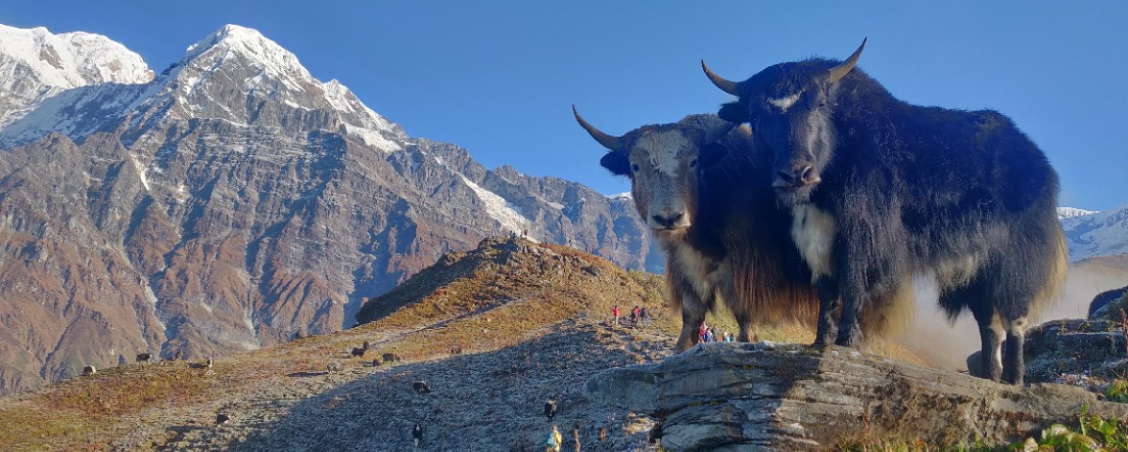
Upper and Lower Dolpo foster rare cultural experiences and landscapes in the form of ancient monasteries, remote villages, and dramatic mountain vistas. It is one of those remote adventures to Shey-Phoksundo National Park where one can meet yak herds, Buddhist monasteries, and mountain scenery wonders. You are most probably familiar with the secluded Himalayan high plains along with the ancient uninterrupted culture of the Dolpo region because of the Oscar-nominated film Caravan. It is time to move beyond the cinematic presentation and embark on some of the few less-traveled trails in the area to realize the true spirit of Dolpo.
This trek also offers the opportunity to witness one of the world’s deepest Himalayan lakes, Phokhsundo, with stories being narrated of the ancient Salt Trade Route between Tibet and Nepal. You shall also glimpse the culture of Dolpo and landscapes so barren that they resemble the Tibetan Plateau.
Trekking through Dolpo is really an adventure through a truly remote, rarely traveled place. Apart from spectacular places, great company, diverse people, villages, valleys, and these peaceful glades of pine, oak, and rhododendron await you. In true absolute altitude, Dolpa lies between the lofty ranges of Dhaulagiri Himalayas and Tibetan Plateau as the highest human habitation.
Phoksundo National Park is inhabited by animals like musk deer, Himalayan blue sheep, and the extremely rare snow leopard. The area is also further inhabited by interesting ethnic groups that speak a Tibetan dialect. This is a trip for soaking in the unique culture of the locals, along with spectacular mountain views and Buddhist gompas.
In the high-altitude western Nepal Dolpo region lies the Tibetan town of Upper Dolpo, the center of Bon culture and tradition. It is most prominent and best preserved in Upper Dolpo, with the whole area dedicated to Tibetan Buddhism. It is appealing to foreigners in its original form. Furthermore, it is located in the Tibetan-Tethys Zone. The Upper Dolpo is made up of parched hills and bare land. Upper Dolpo has Mount Dhaulagiri and other Himalayan peaks around it. The atmosphere of Upper Dolpo is semi-arid, while scant rainfall enters into the region due to the Himalayan obstruction to clouds.
The Lower Dolpo Trek is filled with numerous high-altitude crossings, a crisp turquoise lake, and an opportunity to experience a culture that is Tibetan to its very roots since the eighth century. This journey is similar to taking a walk through time, in which the people have remained cheerful despite the tough environments. More than anything, this trek will change a person’s life, changing their perspective on “life” and becoming “free.” It will further enrich your understanding of local flora and fauna and the towering scenic beauty.
5. Tsum Valley Trek
Tsum Valley, up north of Manaslu, wasn’t open to outsiders until 2008. Even now, it remains somewhat less explored and far less visited than all other popular destinations. In its heyday, the steep and gloomy valley functioned as a majestic trade route to Tibet; nowadays only very few visit it. The trekkers will be able to feast their gallant eyes on the alluring views of Ganesh Himal, Sringi Himal, and Boudha Himal, and several other mountains in the vicinity. You also get a feel of the Tsum Valley culture with its ancient monasteries and old Tibetan Buddhist customs.
Compared to other places, the area that was formerly a part of Tibet appears entirely different. Visits to ancient gompas, alpine woods, and glacial rivers, plus the exquisite hospitality of the locals from different ethnic communities, are included within this tour. There are more mysteries about Tsum Valley that await to be unlocked by a traveller. The Tsumbas, the people of Tsum Valley, with a culture of their own, also have their own dialect. Their traditional arts and religion are Tibetanly inspired.
Tsum Valley is also known as Hidden Valley. Such a lesser-known trail comprises a rare blend of culture and environment. On this trek, crossing thrilling suspension bridges and walking within dense forests with unbeatable mountain views as a backdrop are pretty assuring. This is a trek any nature lover will find rewarding since the pristine Manaslu Conservation Area is home to an array of flora and fauna.
6. Nar Phu Valley Trek
This trek combines the remote Nar and Phu Valleys in the Annapurna region and takes you over difficult trails, to explore uncommon cultures and wide vistas.
The Nar Phu Valley Trek is one of the least frequented trekking destinations in Nepal. Lying concealed along the Annapurna belt, this is the hidden treasure. The trail is very remote and runs along the east of the Tibetan frontier into the Nar and Phu Valleys, and these were closed up until 2002. Trekking into this ancient settlement of rare cultures and traditions will be reminiscent of old Tibetan ways. The untamed scenery, with views of Kanguru Peak and Himlung Himal, makes this less-frequented climb alluring.
Old monasteries, unique customs, and gorgeous landscapes adorn this culturally rich tour. The dangerous Kangla Pass and Thorongla Pass open up to the perspective of Annapurna II and Gangapurna and so many other peaks. This journey leads across pathways decorated with Chorten gates and a sparse Himalayan pine forest to encounter old Tibetan towns. Packed upon one another, the stone houses are quite a delightful sight. Some beautiful sites along the trekking way are Yak Kharka, Manang village, and Thorung La Pass. And finally, Nar Phu Valley Trek heads out through Muktinath, the temple sacred to Hindus and Buddhists. This trail sees limited passage due to its remote nature, which gives a feeling of solitary appreciation for nature and culture.
7. Dhaulagiri Circuit Trek
Along with views of the seventh-highest peak in the world, some of the most challenging terrains in Nepal, and magnificent glaciers, the rarely taken Dhaulagiri Circuit Trek goes around the grand massif of Dhaulagiri. The isolated and very rarely visited area here would give you a truly unique opportunity to witness nature’s unadulterated splendour.
Even though the trail is less crowded, it climbs to 5,360 meters and is a difficult journey that crosses difficult high crossings like French Pass and Dhampus Pass. This trek is not recommended for beginners, and we also advise not attempting the trek unless you are an experienced hiker. However, the journey captures you with the sheer beauty spread all through it, which itself makes the trek worth it.
Conclusion
Though Nepal is geographically small, for travelers and adventure enthusiasts, it is a vague country with so much to explore. Ease your travel by tailoring the trip according to your body and interests, and personalize your trip in your way. Wherever you go for a trek, stay safe and enjoy the time you spend there.







Comments [0]
Add CommentNo Comments Found